
Hey there fellow marketers and business owners,
In 2026 the social media landscape feels more crowded than ever. Platforms evolve quickly, algorithms grow smarter, and every brand fights for the same attention. Yet many teams still report success based on likes, follower counts, and raw impressions. These vanity metrics create a warm glow in monthly meetings but rarely prove that social media is actually driving revenue, leads, or real growth.
We see this pattern constantly while working with clients. They invest serious time and budget only to feel uncertain about the return. The shift we recommend is simple yet powerful when it comes to Measuring ROI. When you focus on Measuring ROI instead of surface level numbers, everything changes. Content performs better, budgets get approved faster, and social stops feeling like a guessing game.
Why Vanity Metrics Fall Short in 2026
Vanity metrics are easy to track and even easier to celebrate. A post that hits high impressions or earns thousands of likes looks impressive on a slide. The problem is these numbers often have little connection to actual results. A viral reel might generate buzz without a single qualified lead. Follower growth can come from uninterested audiences who never convert.
In 2026 users have become very good at spotting low effort or generic content. They scroll past it without engaging deeply. Platforms now reward content that holds attention, earns saves, and sparks meaningful conversations. That is exactly why human first expert led content continues to win. Real perspectives, original case studies, and transparent authorship create the kind of engagement that algorithms favor and that later translates into pipeline and sales.
The Metrics That Matter When Measuring ROI
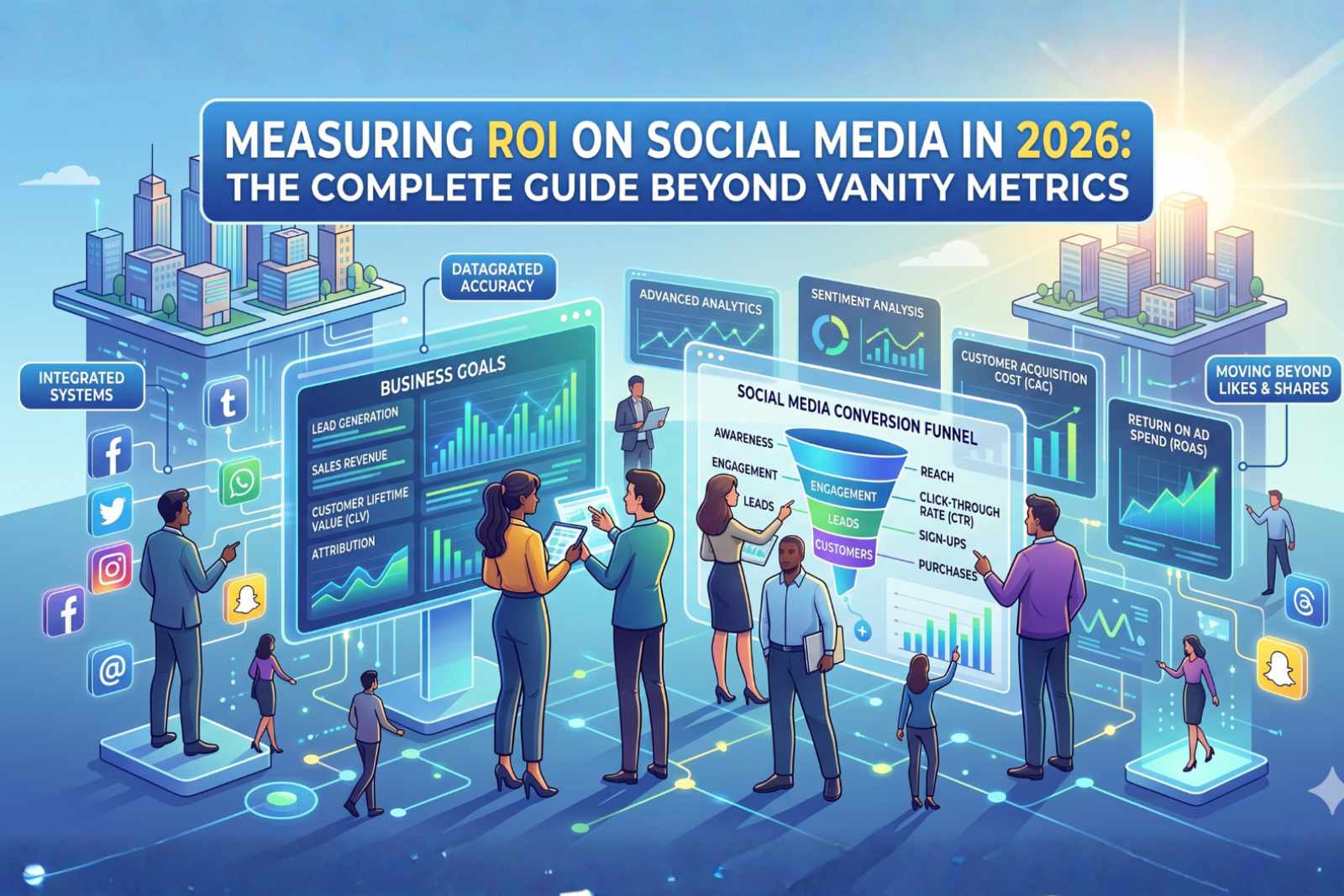
So what should replace vanity metrics? Focus on numbers that show clear business impact when Measuring ROI. Here are the ones we see delivering the strongest results right now.
Conversion rate tells you how many people who interacted with your content went on to take a desired action such as booking a call, downloading a guide, or completing a purchase. This is far more valuable than likes because it shows movement through the funnel.
Return on ad spend, or ROAS, is essential for any paid social activity. It reveals exactly how much revenue you generate for every unit of currency spent. When ROAS is healthy you can confidently scale. When it drops you know exactly where to adjust.Content level ROI looks at individual posts or campaigns and measures their contribution to pipeline or closed revenue. This approach helps you identify which topics, formats, and voices actually work instead of guessing.
Branded search lift measures how often people search for your brand name after seeing your social content. It is one of the cleanest indicators of demand generation. Content save rate shows real value because people only save posts they plan to revisit or share. Average watch time on video reveals whether your storytelling keeps people hooked long enough to absorb the message. Non follower impressions demonstrate true reach beyond your existing audience.
These metrics together give you a complete picture of whether social media is working as a growth channel when Measuring ROI.
How to Calculate and Attribute When Measuring ROI
The basic formula is straightforward when Measuring ROI. Take revenue attributed to social, subtract your total social costs including ads, tools, and team time, then divide by those costs and multiply by one hundred. The hard part is accurate attribution in a world of dark social and multi touch journeys.
Start by tagging every link with clear UTM parameters so Google Analytics can track exactly which posts and campaigns drive traffic and conversions. Set up conversion events properly and connect your analytics to your CRM. For larger budgets, add promo codes unique to each campaign or run geo based incrementality tests. These methods help you move beyond last click attribution and see the full contribution of social.
Many teams also track assisted conversions. A single post might introduce someone to your brand while a later one moves them to purchase. When you capture both you get a much more honest view of ROI.
Real World Proof That Proper Measurement Works
We have seen this transformation repeatedly when Measuring ROI with our clients. In our work with a mid sized professional services firm, shifting focus from follower growth to assisted conversions and content level ROI helped them attribute thirty five percent of new qualified leads directly to social content within six months. Their cost per acquisition dropped by more than twenty percent while the quality of inbound inquiries rose noticeably.
For a consumer brand client we worked with, incorporating authentic expert perspectives and real case studies (properly anonymized of course) lifted save rates by over forty percent. Comment depth increased as well. Those saved posts and thoughtful discussions fed straight into higher consultation bookings and direct sales.
In our work with e commerce brands scaling paid social, we consistently notice that posts featuring genuine founder or expert stories deliver two to three times higher ROAS than generic polished creatives. The difference comes from trust. People buy from voices they recognize and believe.
Practical Steps to Measuring ROI Starting Today
Making the change does not require expensive new tools or a complete overhaul. Begin with these steps when Measuring ROI.
Define your primary business goals for social media first. Decide whether you are driving leads, direct sales, brand awareness that leads to pipeline, or customer retention. Clear goals make every later decision easier.Audit your current tracking setup next. Confirm that UTMs are in place on all links, conversion events are defined correctly in your analytics platform, and data flows into your CRM without gaps.Select three to five core metrics that align directly with your goals. Resist the urge to track everything. Focus on the numbers leadership cares about such as pipeline generated or revenue attributed.
Build a simple monthly dashboard that leads with ROI focused metrics. Include vanity numbers only as supporting context so everyone sees the full story without getting distracted by surface metrics.Review performance and optimize on a regular schedule. Test new content formats, expert voices, and calls to action. Double down on what drives measurable results and pause what does not.
Finally, invest in creating human first expert led content. Authentic perspectives and real world case studies naturally improve the engagement metrics that later feed into stronger ROI.
Move Beyond Vanity Metrics and Build Real Growth
Vanity metrics still have a place as quick health checks. They can show whether a piece of content resonates at first glance. But they should never be the main story you tell leadership or use to guide strategy. In 2026 the brands seeing consistent growth from social are the ones Measuring ROI properly, attributing results accurately, and creating content that builds genuine trust.
Stop settling for numbers that look good on paper but deliver little in the bank. Focus on Measuring ROI, track the metrics that connect to revenue, and pair that measurement with content that feels human and expert led. The combination creates a social presence that works harder and proves its value every month.
If you want practical help building a custom ROI measurement framework or developing human first expert led content that drives real conversions, we are ready to support you. Reach out and let us help turn your social efforts into a predictable growth engine.